Opinion: Alaska’s budget shouldn’t hinge on a supermajority
Originally published January 8, 2026 in the Anchorage Daily News. Please click here to see the original publication.
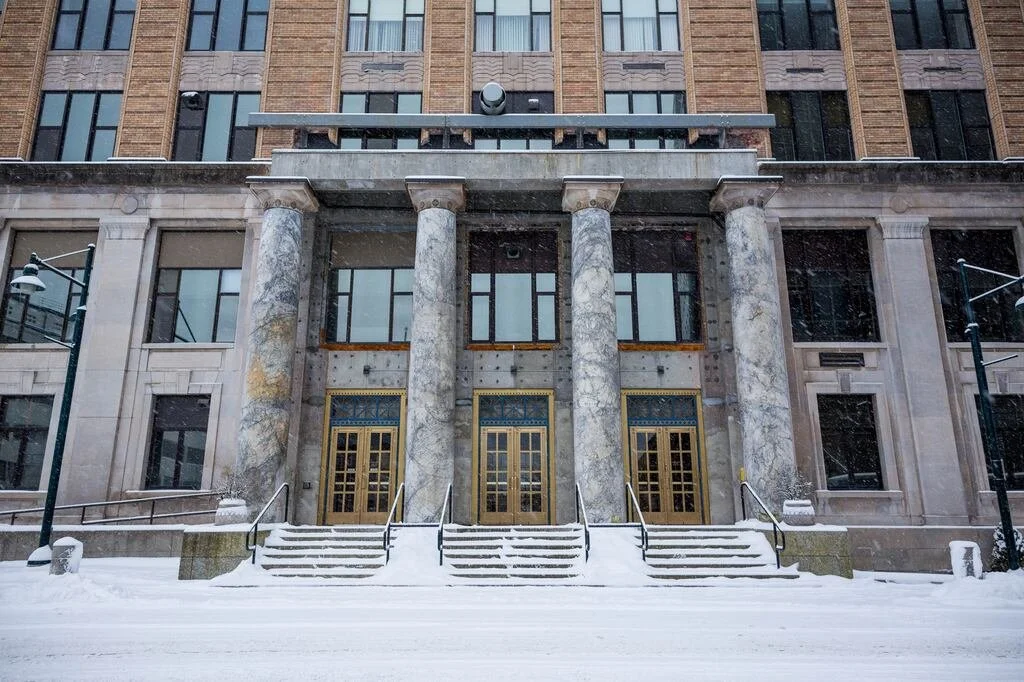
Alaska's State Capitol in Juneau. (Loren Holmes / ADN archive)
Approving the budget is the only legislation the Alaska House and Senate must pass each year, and the public should have a strong voice in the state budget. Unfortunately, the constitutional requirement that three-fourths of legislators must vote to override a governor’s budget veto has weakened the public’s voice. Amending the Alaska Constitution to match the budget override requirement with the two-thirds override standard for all other legislation will strengthen the public’s voice and hold the governor and all legislators accountable to all Alaskans.
The problem of the excessive override standard is not isolated to a bipartisan Legislature working with a more conservative governor. It is an outdated part of our state’s Constitution. Article II, Section 17 of Alaska’s Constitution states:
“Bills to raise revenue and appropriation bills or items, although vetoed, become law by affirmative vote of three-fourths of the membership of the legislature. Other vetoed bills become law by affirmative vote of two-thirds of the membership of the legislature.”
If the governor vetoes a typical policy bill, 40 out of 60 total legislators are needed to override that veto. An example is Senate Bill 183, which required the Department of Revenue to comply with audit requests. Gov. Dunleavy vetoed SB 183 this summer. In August, the Legislature voted to override that veto by a vote of 43-16. Because it was not an appropriation bill, only 40 votes were needed and the override was successful.
For appropriation bills, however, the Legislature needs 45 votes to override a veto. For example, Gov. Dunleavy vetoed more than $50 million in education funding from the state budget this year. In August, the Legislature voted to override that line-item veto by a vote of 45-15. The override barely passed, and it was the first time since 2009 that the Legislature successfully overrode an appropriations veto. In contrast, the Legislature overrode a typical policy bill in May 2025 — House Bill 57.
The constitutional requirement for 45 out of 60 legislators to override an appropriations veto like the annual budget is unusual. Alaska is the only state with such a high standard. The other 49 states have lower override standards of two-thirds or a simple majority. This strict requirement may have made sense when Alaska’s framers wrote our constitution in 1959, but it does not make sense today.
In school, we learn about the importance of the balance of power in government. The legislative, executive and judicial branches act as checks and balances on each other to ensure that no branch oversteps its power. At the federal level, Article V of the United States Constitution allows the states to consider ratifying amendments to the Constitution that are approved by two-thirds of both the House and Senate. Alaska’s three-fourths override requirement means that it is more difficult for our Legislature to override a governor’s appropriation veto than it is for Congress to propose an amendment to the U.S. Constitution. Our Legislature has little ability to check the executive branch on financial matters.
Senate Joint Resolution 2 proposes an amendment to the Alaska Constitution to lower the 45-vote override requirement on revenue and appropriation bills to 40. It aligns the process for revenue and appropriation vetoes with the process for all other vetoed bills. It corrects an imbalance of power between the Legislature and the governor and returns an essential source of power to everyday Alaskans. If the Legislature approves SJR 2, it will appear on the ballot for consideration by all Alaskans in the November 2026 general election.
I encourage Alaskans of all parties and ideologies to support this common-sense change.
Matt Claman represents District H in the Alaska Senate and is chair of the Senate Judiciary Committee. He is a candidate for governor in 2026.